
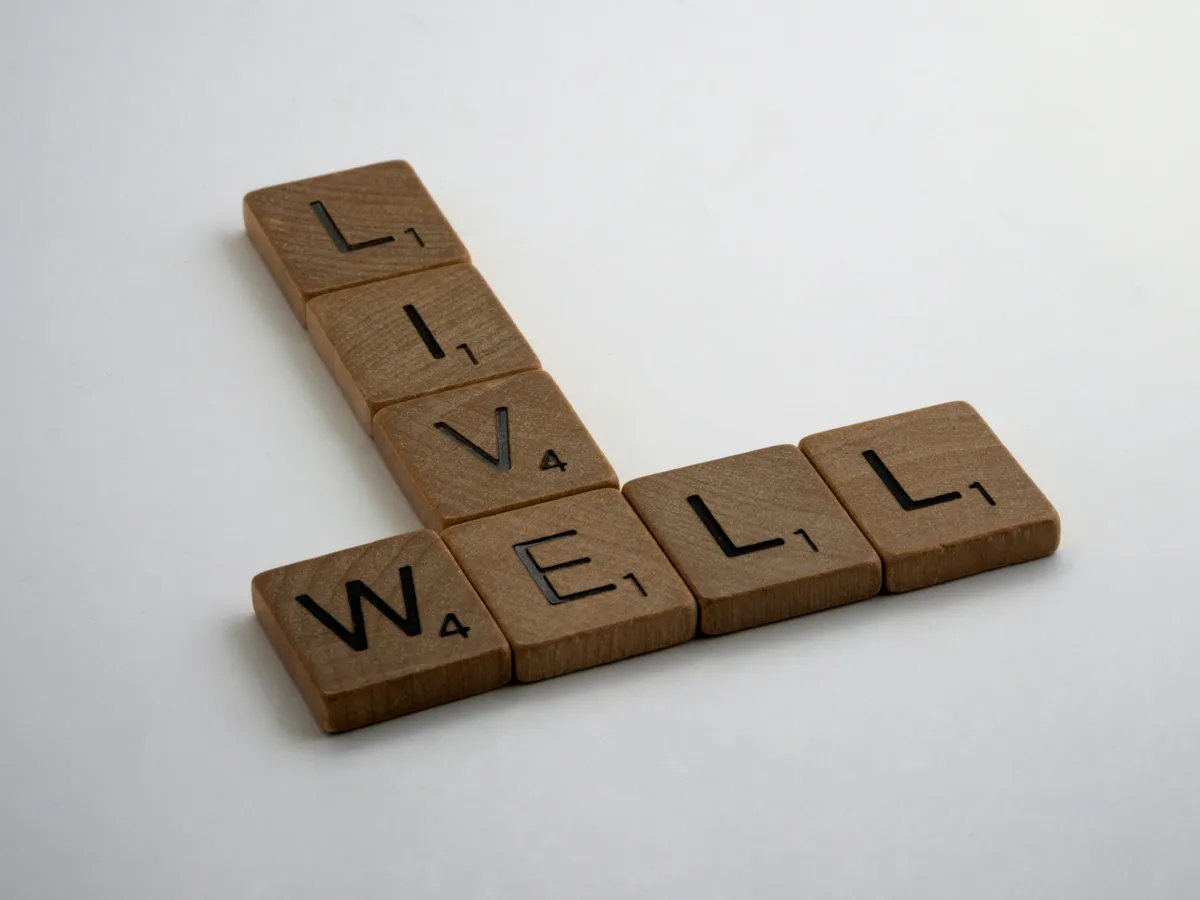
A Framework for a Life That's Well, Not Just Busy
A life that's well, rather than just busy, comes down to four conditions working together, feeling well, working well, teaming well and leading well, and I built this framework first for workplaces before I realised it maps just as cleanly onto our personal lives, because the same four things that let people do good work together are the ones that let us build a good life, and they depend on each other in an order that matters.
You can read it, listen to it, or watch it, whichever way you like to take an idea in.
Read the blog · Listen wherever you get your podcasts · Watch on YouTube
The short version
The framework has four parts: feel well, work well, team well, lead well.
They build in order, because a team cannot function well until people feel well and have clear ways of working.
It applies just as much at home as it does at work.
Feeling well is about building positive emotion and coping with the small, everyday stresses that pile up.
Leading well includes leading yourself, showing up for your own life and not only for everyone else's.
What is the feel well, work well, team well, lead well framework?
It is a way of describing the conditions that let people, and lives, go well, built around four domains that sit on top of one another. I developed it a couple of years ago for my second book, Wellbeing Leadership, as my answer to what it actually takes to create a workplace where people are well, and what keeps bringing me back to it now is that the same four conditions describe a good life just as well as they describe a good workplace, whether you are a teacher, a leader, a founder, a parent, or all of those at once. The four are simple to name, feel well, work well, team well and lead well, and the work is in how honestly you look at each one.
Why does the order matter?
The order matters because each domain rests on the one before it, and skipping ahead is where most good intentions fall over. People have to feel well before they can work well, they need clear ways of working before a team can function, and only then can a team truly team well, so when a team feels scrambled or tense the cause is usually further back down the chain than the team itself. If you try to fix collaboration without first fixing the processes underneath it, you are decorating a room with no floor, and the same is true at home, where a household runs on the same foundations in the same sequence.
What does it mean to feel well?
Feeling well is the foundation, and it is built from two things, the capacity to create positive emotion and the capacity to cope with ordinary stress. On the first, we can learn to notice and hold on to good moments through gratitude and through savouring, which is the simple practice of paying real attention to something lovely and breathing it in so you can return to it later, and this is grounded in the research on positive emotion by Barbara Fredrickson. On the second, feeling well does not mean being happy all the time, it means being able to meet the normal stresses of a day without them tipping you over, which the World Health Organization names as one of the pillars of wellbeing within mental health. The thing I want you to notice is how small these stresses usually are, the spilt coffee, the traffic, the email you were not expecting, the phone you cannot find, the photocopier no one refilled, because any one of them is survivable, but five of them before nine in the morning is enough to decide your whole day, and the skill worth building is spotting those micro-stresses and ironing out the wrinkles so you respond to them rather than react.
What does working well actually look like?
Working well is about the systems, processes and structures that let you do good work without friction, and in every conversation I have had about workplace wellbeing over the last five years or so, this is the one that matters most. People mostly feel fine, what drains them is not being able to do their job well, because almost everyone wants to do work that has purpose and meaning, and when the way we operate is murky or inconsistent that desire curdles into stress. So the questions worth asking are where there is no clarity, where there is no consistency, where energy is going into something that serves no real purpose simply because it is how things have always been done, and the same lens belongs at home, where the daily admin of bills and groceries and meals is its own kind of work, and where a little self-professionalism, a few reliable systems, saves you from the slow accumulation of overdue bills and last-minute takeaway.
How do you know if your team is working well?
A team that works well is one that functions well, which is a very different thing from a team that simply gets along, because knowing each other's coffee order makes you a friendly group, not a high-functioning team. The clearest marker is psychological safety, which means you can raise a concern, an idea or a disagreement without fear of being judged, ridiculed or having it used against you later, and the quickest way to spot its absence is to watch what happens after a meeting, because if the real conversation is happening in the corridor afterwards rather than in the room, you do not have it. The same test applies to your home team, your family or household, where psychological safety and a fair share of the load matter just as much, and where, if you are carrying most of the invisible domestic work, the most useful thing you can do is call a family meeting and name it, because more often than not the people around you have no idea how much you are holding and are willing to help once they do, even if the fourteen-year-old folds the washing nothing like the way you would.
What does it mean to lead well?
Leading well is leading in a way that is real and honest rather than a performance, and the question I get asked most is how to put on a front as a leader on the days you do not feel strong, to which my answer is simple, do not. A front is not leadership, and you do not owe anyone every detail of what you are carrying, but you can give people an honest heads-up, a quiet "I have something going on at home and I am a little stretched, tell me where you most need me", because when people do not know what is happening they invent a story, and the story they invent is rarely in your favour. Leading well also means leading the other three domains, helping the people around you feel well, giving them clear ways of working, and holding the team together, and then it turns inward, because self-leadership is leading your own life on purpose, protecting your sleep, making real time with the people you love rather than collapsing in front of the television each night, moving your body so you arrive home with something left to give, so that you can actually show up for the parts of your life that matter most.
So the question I would leave you with is not "how do I get more out of my day", but "which of these four am I neglecting, at work or at home", because that is usually where the next bit of ease is hiding. I come back to these four more than anything else I have built, and I think that is because they are less a model to admire than a set of lenses to live by.
Questions people ask
What are the four parts of the framework?
The four parts are feel well, work well, team well and lead well. They describe the conditions that let people do good work and live a good life, and they build on each other in that order, so each one depends on the ones before it.
Can I use this framework at home, not just at work?
Yes, and that is the shift that keeps bringing me back to it. The same four conditions that make a workplace function also describe a household and a life, so you can audit your personal world through them too, asking where you feel well, where your daily systems are clear, how your home team is functioning, and where you need to lead yourself better.
What does "feel well" mean if I can't be happy all the time?
Feeling well is not about being happy constantly. It is about building genuine positive emotion through things like gratitude and savouring, while also being able to cope with the ordinary stresses of a day, so that the small frustrations that pile up do not decide how you feel.
What is psychological safety in a team?
Psychological safety means you can raise concerns, ideas and disagreements without fear of being judged, ridiculed or having it held against you. A useful sign that it is missing is when the honest conversation happens in the corridor after the meeting rather than inside it.
Where does the framework come from?
It comes from my second book, Wellbeing Leadership, where I first set out these four domains as the conditions for a wellbeing-led workplace. Since then I have come to use the same four lenses for life outside work as well.
The Wellness Paradox — available now
The Wellness Paradox explores the six paradoxes that keep us trapped in a version of success that was never designed to make us well. It's not a checklist, and it's not another self-care plan. It's an honest look at the systems we've inherited, and an invitation to start living differently.
It's for anyone who is tired of being told to do more.
Book orders → Direct from Author ▪ Amazon.com
About Amy Green
Amy Green is a futurist, keynote speaker, and author of The Wellness Paradox. She is the founder of The Wellness Strategy and has spent years studying the intersection of how we work, how we live, and the systems that shape both. Her work reaches educators, executives, and leaders who are ready to think differently about what success really means.
Website · LinkedIn · Instagram · YouTube
Never miss an episode
If this resonated, subscribe wherever you listen, and share it with someone who needs to hear it.