
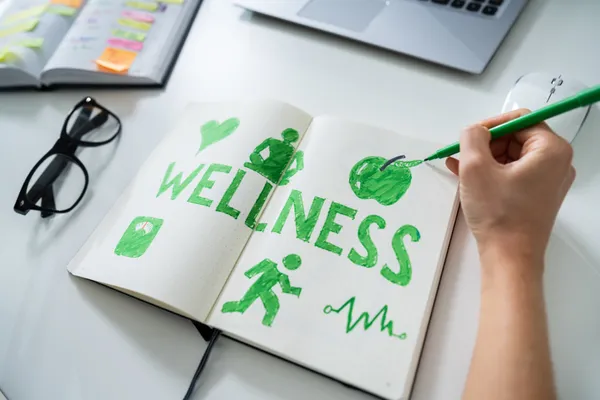
The Wellness Paradox: Why the cure isn't working
LISTEN ON SPOTIFY
Why Adding More Wellness Isn't Making You Well
There's a reason the self-help section keeps getting bigger, and it isn't that we're getting better at being well, it's that somewhere along the way someone realised our discomfort could be a business model, and they built an entire industry on the promise that if you just added one more thing, tried one more strategy, bought one more supplement, you might finally feel okay.
Where it all began
If we want to understand why we're so preoccupied with wellness, and why all that preoccupation still doesn't seem to be working, it helps to go back a little, because the model the whole industry is built on didn't appear out of nowhere, it has roots, and once you can see those roots the whole thing starts to make far more sense.
Before the Second World War, psychology held three concerns at once; it cared for people living with mental illness, it helped ordinary people build happier and more meaningful lives, and it studied the people who were gifted and talented so it could understand them better.
Everyone was accounted for, whether they were struggling or steady or somewhere in between. Then the war came, and in the face of so much suffering the focus narrowed almost entirely onto treating illness, which mattered enormously, but it meant the other work, the part that said you don't have to be broken to deserve support, was set aside. And that gap, the one that suggested you should be able to manage on your own unless something had gone seriously wrong, never really closed. It got filled instead, by an industry that was more than happy to sell us the tools we were never taught to find in ourselves.
Why your smartwatch might be making things worse
The wellness industry didn't set out to make us feel inadequate, but that is so often what it does, because it hands us more and more ways to measure ourselves and then leaves us to draw the obvious conclusion when the numbers aren't where we've decided they should be.
"It's actually not solely based on your sleep score or solely based on how much water you've drunk. Now, all of those things matter dramatically, but because we have decided to create this space called wellness, we've confused what wellness and wellbeing and self-care and even mental health is." — Amy Green
And that confusion costs us, because when we can't clearly name what we're actually chasing, we end up chasing all of it at once. The sleep tracker, the hydration app, the supplement stack, the morning routine and the evening routine, the weekly massage and the monthly retreat, all of it sitting side by side on a list that never seems to get any shorter.
Wellness and wellbeing and self-care and mental health are not the same thing, they overlap and they shape one another, but they are not interchangeable, and when we treat them as if they are we end up managing the symptoms of symptoms, adding layer on layer, and wondering why none of it ever quite works.
What you're chasing and what you actually need are two different things
The wellness industry runs on a single question that it keeps asking in the background, which is "What else can I add?", but the question it never wants you to reach for is the one that actually matters, and that question is "What kind of life do I actually want to live?", because until we start there, no smart ring or sleep score or green shake is going to give us what we're really after, and what we're really after was never a better wellness routine, it was a life that feels like ours.
"We're adding so many things all of the time, and they're disjointed. What we actually need to do instead is ask ourselves, 'What season of life am I in? What supports my wellbeing?'" — Amy Green
When you start from the season of life you're actually in, from your values and your real capacity rather than someone else's highlight reel, you stop building a routine that looks impressive from the outside and start building one that genuinely holds you, one that doesn't add to the weight of the day but helps you carry it.
What sustainable wellbeing actually looks like
None of this means throwing out your supplements or cancelling your gym membership, because some of what we do in the name of wellness really does help, and the problem was never any single choice, it was the system that told us we had to do all of it, all of the time, or we clearly weren't trying hard enough. Sustainable wellbeing doesn't come from adding more, it comes from getting honest about what is actually working, what fits the life you're living right now, and what you're only still doing because an industry built on your discomfort told you that you should.
So the question I keep coming back to isn't "What else should I add?", it's "What kind of life am I actually trying to build, and does any of this serve it?". That's where I'm choosing to start.
WATCH ON YOUTUBE
The Wellness Paradox — available now
The Wellness Paradox explores the six paradoxes that keep us trapped in a version of success that was never designed to make us well. It's not a checklist, and it's not another self-care plan. It's an honest look at the systems we've inherited, and an invitation to start living differently.
It's for anyone who is tired of being told to do more.
Book orders → Direct from Author ▪ Amazon.com
About Amy Green
Amy Green is a futurist, keynote speaker, and author of The Wellness Paradox. She is the founder of The Wellness Strategy and has spent years studying the intersection of how we work, how we live, and the systems that shape both. Her work reaches educators, executives, and leaders who are ready to think differently about what success really means.
Website · LinkedIn · Instagram · YouTube
Never miss an episode
If this resonated, subscribe wherever you listen, and share it with someone who needs to hear it.