
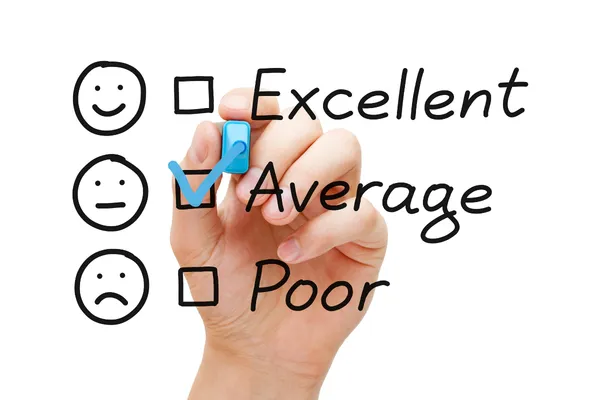
What If Average Was Actually Enough?
LISTEN ON SPOTIFY
The Power of Average
You're tired, you're trying, and the world keeps insisting that it still isn't enough, but what if the goal was never to be extraordinary in the first place, and what if average was actually enough, not as a consolation prize and not as a form of giving up, but as a deliberate choice you get to make for yourself.
The problem with a world that can't stop chasing
Average is seen in a negative light, and I believe this is intentional. We have created systems that make people afraid of being average. Schools look down on C grades, workplaces reward those who get promoted the fastest, and social media shows only the best moments, making others feel slightly less than enough when they watch. What ties all of that together is a version of success built on the assumption that whatever you have is never quite enough, that there is always another goal and another milestone and always something more just out of reach, and the result is that people are exhausted.
And when you look at it honestly, the whole thing collapses under its own logic, because if every single person, every single day, is oriented toward being above average and achieving more than the people around them, then that world simply cannot exist, average is always part of the equation by definition. So maybe what we've actually done is build a version of success that most people were never going to reach, and then turned around and told everyone who didn't get there that they just hadn't tried hard enough, which I think is far less a personal failing than it is a design flaw.
What we lose when ordinary becomes shameful
Living in a constant state of not enough is tiring. There's a low, persistent sense that you should be doing more and achieving more and becoming more simply to justify the life you're already living, and it tends to build slowly, underneath all the productivity and the goal-setting and the relentless push to optimise, until one day you look up and realise you can't quite remember the last time anything felt like enough.
"What if the goal could just be to be average? What if the goal could be to lower our expectations a little bit and not always keep climbing and chasing and doing and being and not trying to have the next best big thing?" — Amy Green
That's not a small question, and for a lot of us it's a deeply confronting one, because we've spent so long treating ordinary as something to move past that we've very nearly lost the ability to recognise it as something worth staying in. But ordinary is where most of life actually happens, in the Tuesday evenings and the unremarkable meals and the conversations that will never make it onto anyone's highlight reel, in the slow accumulation of days that don't look like much from the outside but are, if we're honest with ourselves, more or less the whole point.
"Not everything has to be extraordinary and exceptional in life. You can have some things that are average. Perfectly okay." — Amy Green
Average isn't everywhere, it's intentional
This is really about being honest with yourself about what actually deserves your best and what might be silently stealing it, because the season of life you're in matters enormously, and what you choose to go all in on can shift depending on where you are. What you're able to prioritise in one season might simply not be available to you in the next, and the version of success you were chasing a while ago might not fit the person you've become since. When we refuse to let anything at all be average, we usually end up giving everything a little less than it deserves, and the things that matter most are left with whatever remains once the pursuit of more has taken its share. So consciously choosing what gets your extraordinary and what gets your average isn't lowering the bar, I think it's finally being honest about where the bar was always meant to sit.
What ordinary makes possible
Here's what shifts when you stop treating ordinary as a failure: the noise settles, the comparison loses its grip, and what you're left with is an ordinary, average, beautifully mundane life that turns out to be rich in all the ways that actually matter.
"When ordinary is genuinely good and seen as enough, when your life without having to be exceptional all of the time exists, then there can still be so much meaning and joy and connection and dignity in that and satisfaction. It's not lowering the bar at all. It's finally building something that's right for you." — Amy Green
That isn't settling, I think it's clarity, the particular kind that only arrives once you stop measuring your life against a standard that was never really designed to fit it in the first place.
"We need to be able to look at the ordinary and the beige and the grey in our lives and call it good. Call it great. Because this is what truly matters when it comes to designing a successful, healthy, happy and well life." — Amy Green
The beige days and the grey ones, the days that don't photograph well and don't make for good stories, might just be the ones actually holding everything else together, and they deserve far more than to be treated as obstacles standing between you and the next extraordinary moment.
The question worth sitting with
So the question I'd leave you with is a simple one, which is "What is actually enough for me right now?". Answer this without wondering what else you could be achieving or what the next milestone ought to be, just this, just what is actually enough, in the season you're in, for the person you actually are. Because when you can answer that, something shifts, the pursuit stops feeling like the point, and the life you're already living starts to look a great deal more like enough. That's the power of average, and I think it was always available to you.
The Wellness Paradox — available now
The Wellness Paradox explores the six paradoxes that keep us trapped in a version of success that was never designed to make us well. It's not a checklist, and it's not another self-care plan. It's an honest look at the systems we've inherited, and an invitation to start living differently.
It's for anyone who is tired of being told to do more.
Book orders → Direct from Author ▪ Amazon.com
About Amy Green
Amy Green is a futurist, keynote speaker, and author of The Wellness Paradox. She is the founder of The Wellness Strategy and has spent years studying the intersection of how we work, how we live, and the systems that shape both. Her work reaches educators, executives, and leaders who are ready to think differently about what success really means.
Website · LinkedIn · Instagram · YouTube
Never miss an episode
If this resonated, subscribe wherever you listen, and share it with someone who needs to hear it.